Best matches
20 results-
Mattos 5768Volume 4 · Issue 40
Decline of Humanity
this is a single form of existence. Additionally, the Creator gave to us another form of existence, one that we can reach after we traverse our current existence, which He gave to us first (cf. Rambam Hilchos Teshuvah 8:8).
-
Devarim 5768Volume 4 · Issue 41
Whisper of Hope
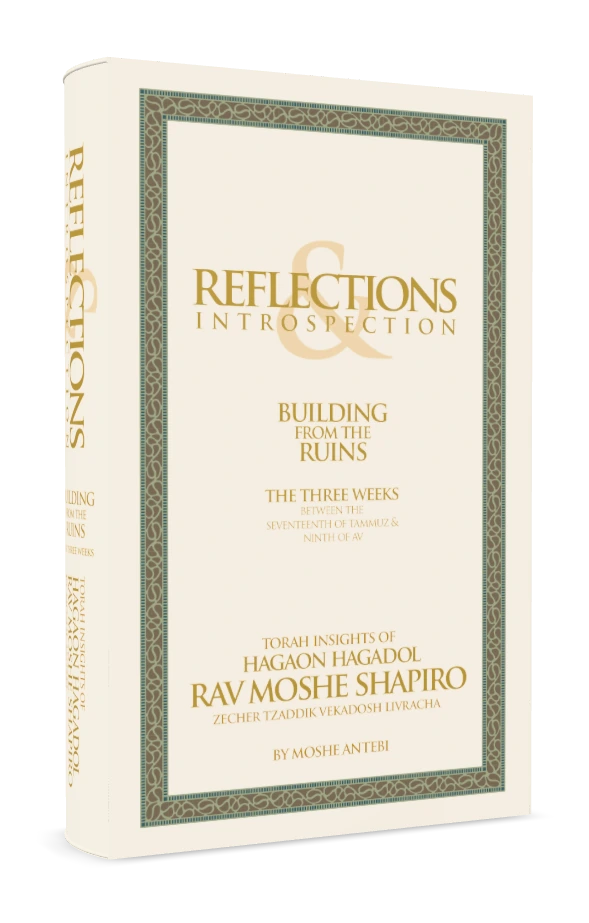
The Ninth of Av is distinct in its customs and particularly in its order of prayer. All fasts were established to awaken the hearts and to open the paths of repentance (Rambam Hilchos Ta’aniyos 5:1) and consequently, they include penitential prayers and supplications. On the Ninth of Av, however, we recite very few prayers and no supplications and penitential prayers; we only recite elegies and laments
-
Toldos 5768Volume 4 · Issue 9
Reflection of Joy
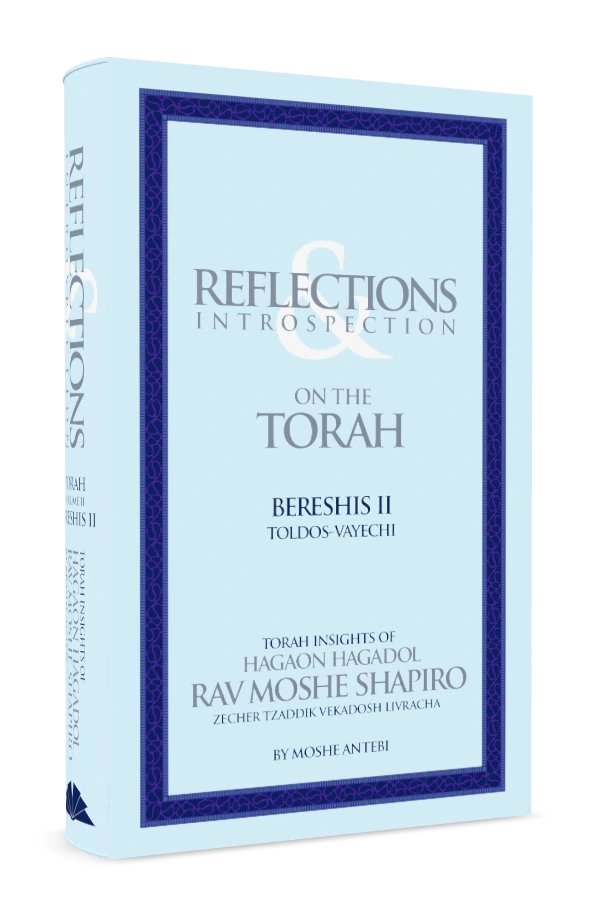
The Talmud states (Pesachim 50b; Rambam Hilchos Teshuvah 10:5) that whenever a person begins to do something, he does it not for its sake, but by doing it not for its sake he will eventually do it for its sake.
-
Shoftim 5768Volume 5 · Issue 1
Existential Transition
Of this, it says (Devarim 6:2), “Love God your Lord with all your heart and with all your soul and with all your possessions.” In the words of the Rambam (Hilchos Teshuvah 10:3): “What is the proper love? A person should love God with a great and excessive love so fierce that his soul is bound in the love of God. Consequently, he is constantly preoccupied with it as though
-
Behaaloscha 5769Volume 5 · Issue 27
The Torah of Israel
For example, only during the Ten Days of Repentance do we end the third blessing of the Shemoneh Esrei Prayer with the praise, “The Holy King,” instead of the ordinary ending, “The Holy Lord,” for only then is He revealed as King. One who ends the blessing in this manner
-
Mattos-Masei 5769Volume 5 · Issue 32
Imminence of Renewal
…pies returned—and those tears themselves resulted from the Sin of the Golden Calf, the first sin. Because of it, we lost the higher level of Torah Acceptance, the First Tablets, and we required the Second Tablets, days of repentance, of atonement, of forgiveness, days of rectification. Nonetheless, we yet returned in some manner to our previous state—we received the Second Tablets instead of the First Tablets, which means that the Giving of the Torah remained—albeit obviously
-
Vayishlach 5769Volume 5 · Issue 9
Powers of Triumph
…the fate of the prisoner described in the words of Rabbeinu Yonah (Sha’arei Teshuvah 1:2). While all the other prisoners burrowed their way out of prison and escaped, one prisoner remained and he imagined that his faithfulness…
-
Ki Seitzei 5769Volume 6 · Issue 1
Confident of a Miracle
…rld to Come means the world that comes after This World (Rambam Hilchos Teshuvah 8:8). Obviously, then, there can be no example of it in This World. This World is the current existence—it is this world. The World to…
-
Vayechi 5770Volume 6 · Issue 14
Concealment of the End
This deed is most heinous. A person who informs removes himself from the Jewish Nation and forfeits his portion in the World to Come (Rambam Hilchos Teshuvah 3:12)—and very often, he forfeits even his portion in This World, since Torah law prohibits lifting him out of a pit into which he had fallen, and in many instances commands us to cast him there. In all circumstances, though
-
Vaeira 5770Volume 6 · Issue 16
Man and His World
Rabbeinu Yonah of Gerona who authored Gates of Repentance also authored Gates of Divine Service, in which he writes as follows (chapter 16). “The Holy Blessed One, Who is called righteous and straight, did not create man in His image except so that man would be righteous and straight
-
Emor 5770Volume 6 · Issue 25
From the King's Table
blazing furnace than shame his friend in public.” Tosafos (Sotah 10b, s.v. noach) finds this difficult; a person is only required to forfeit his life for the three cardinal sins of idolatry, immorality, and killing. Rabbeinu Yonah (Gates of Repentance 3:139) explains that shaming another person in public is tantamount to killing him.
-
Bamidbar 5770Volume 6 · Issue 27
Seven Complete Sabbaths
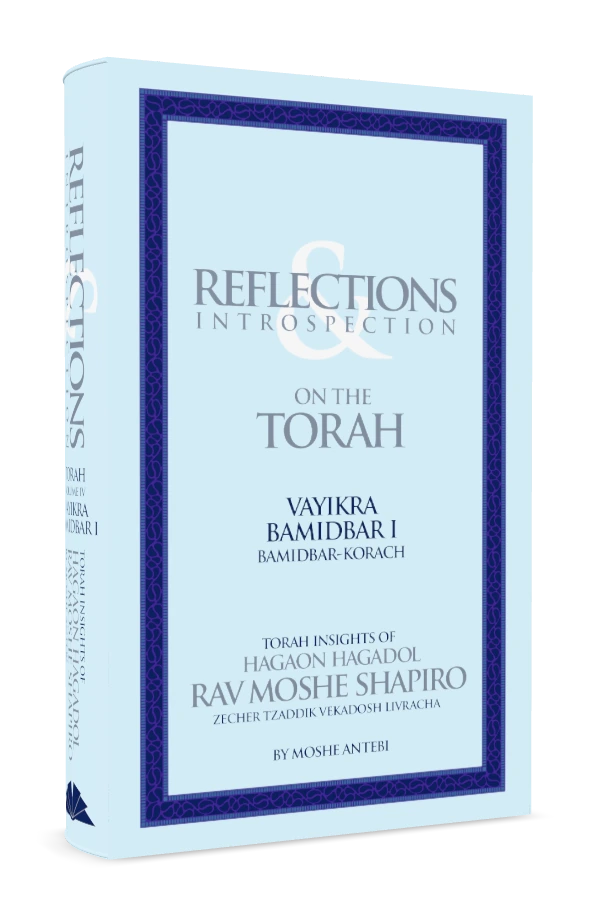
…comprehending this concept; their very nature opposes it (cf. Rambam Hilchos Teshuvah 3:8). But the sages teach that since the commandment, “Count for yourselves,” requires each of us to count on his own (Vayikra 23:15; Menachos 65b),…
-
Naso 5770Volume 6 · Issue 28
Message of Sinai
The Talmud states (Berachos 17a), “In the World to Come, the righteous are seated with their crowns upon their heads, and they delight from the radiance of the Divine Presence.” The Rambam (Hilchos Teshuvah 8:2) explains that the crown refers to the wisdom they perceived during their lifetimes, which in the World to Come will be perceived as pleasurable and enjoyable. In other words, it will be a complete entity.
-
Shelach 5770Volume 6 · Issue 30
Tears of Return
evil would be spoken, if evil would not be a subject of discussion altogether, the world would become entirely good, and an entirely good world means a world in which there is no room for evil (cf. Rambam Hilchos Teshuvah 8:1).
-
Toldos 5770Volume 6 · Issue 8
Wealth of Opportunity
…tunities of time are for the acquisition of wisdom (cf. Rambam Hilchos Teshuvah 8:2). Our task is to endeavor with all our might to realize all our potential, to do something with it. Otherwise, it becomes a futile…
-
Vayeitzei 5770Volume 6 · Issue 9
Oneness of Israel
commit a sin at night, do not think badly of him the next day for he certainly repented.” The Talmud thus depicts the true Torah scholar as one who knows what night is; therefore, we are witness to his repentance; it is certain, beyond doubt.
-
Ki Sisa 5771Volume 7 · Issue 22
Reaching Higher
Talmud explains that the individual is answered only when God is near, but the Community is answered at all times, whenever the Jewish People as a Community call out to God wholeheartedly, as the Rambam states (Hilchos Teshuvah 2:6).
-
VaYikra 5771Volume 7 · Issue 25
World of Life
Would only that we could discuss happier matters—but for one who understands, these matters are extreme cause for happiness, for it is entirely in our hands. The Rambam writes (Hilchos Teshuvah 7:5), “The Torah already guaranteed that Israel will ultimately repent at the end of their exile and they will be redeemed immediately.” He does not say how this will come about, but his source in the aforementioned passage describes
-
Chukas 5771Volume 7 · Issue 34
Indestructible Connection
The Talmud states (Tamid 32a; Sha’arei Teshuvah 2:17), “If your will is to live, die before you die.” To anyone who wants the words of Torah to exist within him, it says (Bamidbar 19:14; Berachos 63b), “This is the Torah, a man who dies
-
Behar 5772Volume 8 · Issue 27
Return to Self
says (Vayikra 16:30), “For on this day, He will atone for you to purify you of all your sins; before God you shall be purified.” It is the day of forgiveness, pardon, and atonement—on condition of repentance. In the Talmud, we find this in dispute (Shevuos 13a), but the ruling is that Yom Kippur atones only for those who repent (Rambam Hilchos Teshuvah 1:3).